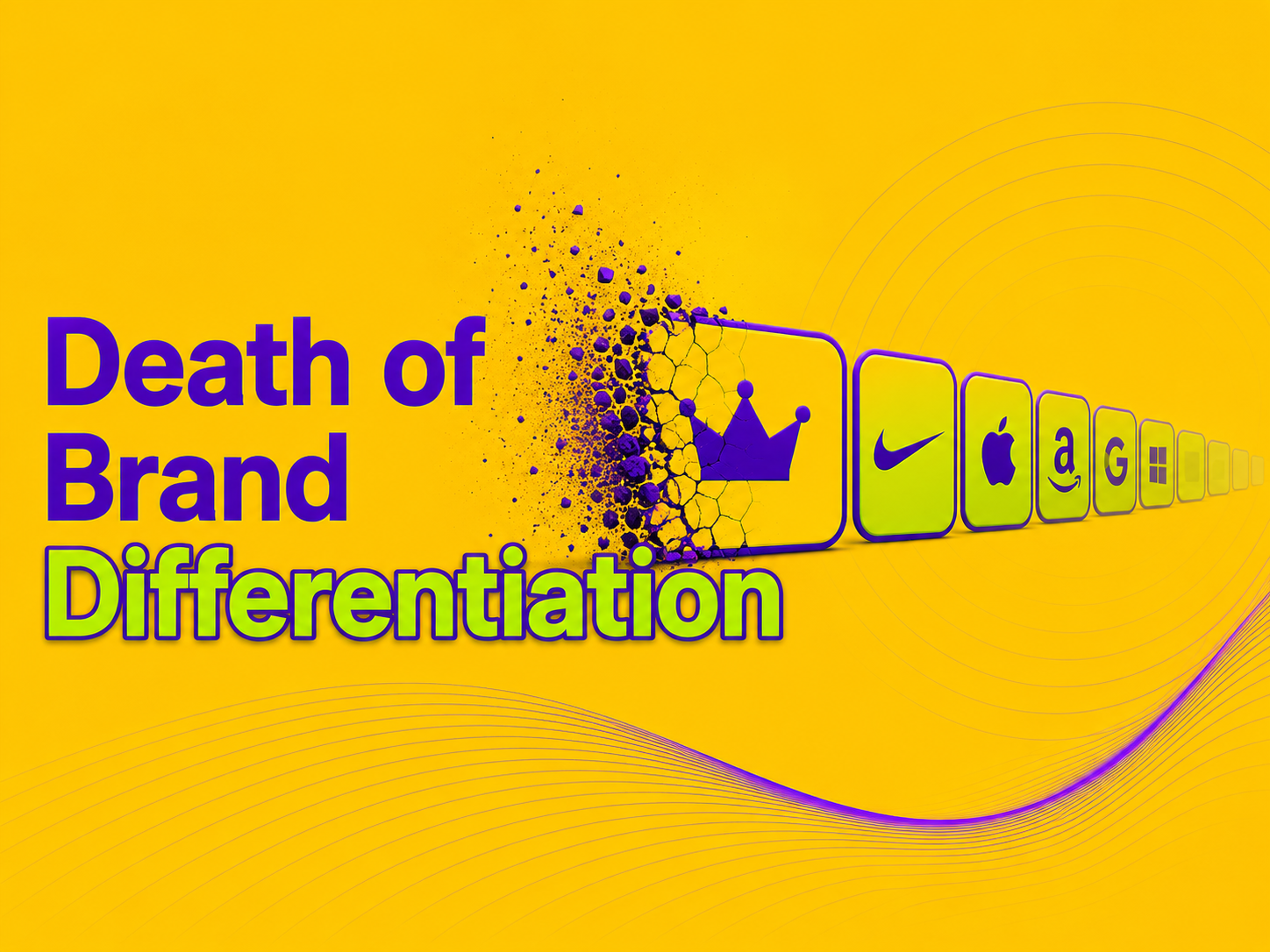
The Death of Brand Differentiation
Here's an uncomfortable thought:
AI might make most brands sound exactly the same.
Not because AI is bad at writing.
Because it's very good at producing the kind of writing marketers already like.
Clear.
Polished.
Professional.
Customer-centric.
Innovative.
Trusted.
Human.
The problem?
Everyone is becoming “human-centered.”
Welcome to the sea of sameness
Look at almost any category and you'll find companies saying remarkably similar things.
We empower.
We simplify.
We transform.
We put customers first.
We use technology to make things better.
None of these statements are wrong.
They're just not particularly memorable.
And AI is about to make this even easier.
A marketer can now generate ten positioning statements, fifty headlines and a year's worth of content before lunch.
But producing more messages doesn't make a brand more distinctive.
It can do the opposite.
Good marketing isn't necessarily distinctive marketing
This is an important distinction.
You can have:
• Great design
• Excellent copy
• Strong targeting
• Perfectly optimized campaigns
• A sophisticated content strategy
…and still be forgettable.
Because people don't remember "good."
They remember different.
Think about the brands you can recognize without seeing the logo.
You probably know them because of a color, a sound, a phrase, a visual style, a product experience or simply a very clear point of view.
That's brand equity.
Not being better at saying the same thing.
Being recognizable when everyone else is saying it too.
AI makes this challenge bigger
The more marketing becomes automated, the more important human judgment becomes.
• AI can help you find the right words.
• It can help you scale content.
• It can analyze audiences.
• It can generate creative directions.
But if every company is using similar tools, the tools themselves aren't the advantage.
The advantage becomes knowing what not to say.
• What to stand for.
• What to reject.
• What your competitors would never say.
• What your customers should immediately associate with you.
That's strategy.
Differentiation requires courage
The safest brand is often the least memorable.
If your positioning is designed to offend nobody, surprise nobody and challenge nothing, you've probably optimized for internal approval rather than market impact.
Strong brands make choices.
They say:
This is who we are.
This is who we're for.
This is what we believe.
And, sometimes, implicitly:
This is what we're not.
That's uncomfortable.
It's also how brands become recognizable.
The next competitive advantage isn't more content
It's more meaning per piece of content.
I'd rather have one strong idea that people remember than 100 perfectly optimized articles nobody can distinguish from everything else.
I'd rather have a brand people can describe in one sentence than a 60-page brand book nobody remembers.
I'd rather have a point of view that creates debate than a message everyone politely agrees with.
Because attention is increasingly abundant.
Meaning isn't.
So is brand differentiation dying?
No.
The easy version of differentiation is dying.
The version where you change the tagline, refresh the logo and call yourself "customer-first" isn't enough anymore.
The brands that win will be the ones that combine technology with something technology can't manufacture on its own:
taste, judgment, culture, personality, and conviction.
AI will make average marketing incredibly efficient.
That's exactly why distinctive marketing will become more valuable.
When everyone can sound good, the brands that sound like themselves will win.