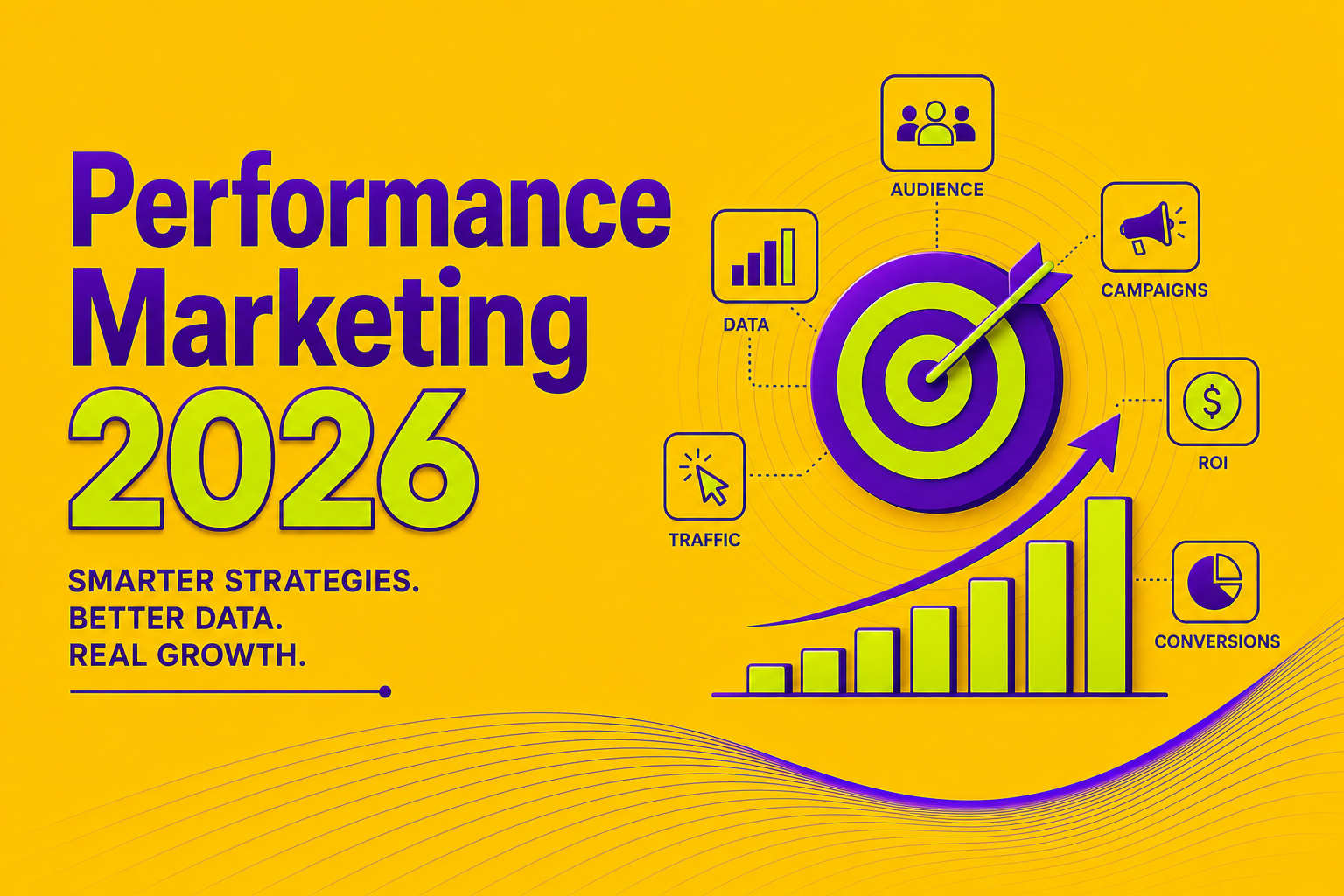
Performance Marketing: What Actually Drives Growth?
Performance marketing has a simple promise:
Spend money. Get results. Measure everything. Do more of what works.
What's not to like?
For years, marketers have become incredibly good at it.
Better targeting. Better attribution. Better creative. Better optimization.
But there's a problem.
Performance marketing can become very good at optimizing the wrong thing.
Performance is not the same as growth
Let's say you run a campaign.
You spend $100,000 and generate $300,000 in revenue.
Great.
But what happens next?
Did those customers stay?
Would they have bought anyway?
Did you attract your best customers or simply the easiest ones to convert?
Did the campaign make your brand stronger?
Did you create demand, or did you just capture demand that already existed?
This is where the difference between performance marketing and growth marketing becomes important.
Performance asks:
Did it work?
Growth asks:
Why did it work, and can we make the business grow because of it?
The performance marketing trap
The more measurable marketing becomes, the more tempting it is to optimize everything.
CTR goes up.
CPA goes down.
ROAS goes up.
Everyone celebrates.
Until someone asks:
"Are we actually growing faster?"
This is where marketing performance gets interesting.
A campaign can have fantastic numbers and still be bad for the business.
For example, you might target people who are already highly likely to buy. Your conversion rate looks amazing.
But you haven't created any new demand.
You've simply harvested demand that was already there.
That's efficient.
It isn't necessarily growth.
So what should performance marketing actually optimize?
I think about it in layers.
1. Attention
Are we reaching the right people?
This is where channels, creative and targeting matter.
Paid search.
Paid social.
Display.
Influencers.
Affiliates.
Video.
The channel matters, but the channel isn't the strategy.
A great channel with the wrong message is still the wrong strategy.
2. Conversion
Once someone pays attention, do they act?
This is where the classic performance marketing metrics appear:
CTR
CPC
conversion rate
CPA
CAC
ROAS
These are useful.
Very useful.
But they are diagnostic tools, not the definition of growth.
3. Customer quality
This is where things get more interesting.
Not all conversions are equal.
One customer might generate €50.
Another might generate €5,000 over three years.
If your performance marketing strategy treats them as the same conversion, you're optimizing against an incomplete picture.
This is why metrics like:
LTV, payback period, retention and contribution margin
matter so much.
4. Incremental growth
And then comes the question I think marketers should ask more often:
Would this have happened without us?
That's the uncomfortable question.
If someone was already going to buy and your ad simply took credit for the conversion, your ROAS might look fantastic.
But the incremental impact could be close to zero.
Attribution tells you what you can associate with marketing. Incrementality tries to tell you what marketing actually caused.
Those aren't the same thing.
Performance marketing vs. digital marketing
They're often used interchangeably, but I don't think they should be.
Digital marketing is the broader universe.
It includes content, SEO, social, email, brand, community and much more.
Performance marketing is more focused on measurable actions and outcomes.
That's its strength.
But it can also become its weakness if we start believing that everything valuable must produce an immediate, trackable conversion.
Some of the most important things marketing does take time.
Trust. Recognition. Preference. Reputation.
You don't always get a clean conversion event for those.
That doesn't make them less valuable.
The best performance marketing doesn't operate alone
This is where I think the old brand-versus-performance debate gets tired.
You need both.
Brand creates preference.
Performance captures demand.
Product creates value.
Retention creates compounding growth.
When these systems work together, performance marketing becomes much more powerful.
If your brand is strong, your ads can be more efficient.
If your product is better, conversion becomes easier.
If your customers stay longer, CAC becomes more attractive.
If your positioning is clear, your creative becomes sharper.
The channels don't operate in isolation.
Marketing is a system.
So, what actually drives growth?
Not one metric.
Not one channel.
Not one campaign.
And certainly not ROAS alone.
Real growth comes from the interaction between:
Demand + Brand + Product + Acquisition + Retention + Economics
Performance marketing is incredibly good at helping us understand the acquisition part.
The opportunity now is to connect it to everything else.
Because the goal of marketing isn't to generate the best dashboard.
It's to build a business that grows.
And sometimes the most important performance metric is the one that doesn't fit neatly inside the dashboard.
Did we create something that people actually want?